Strong El Niño Expected to Peak in December as Seas Around the Maldives Run Up to 2°C Above Normal
The Meteorological Service says the event may become one of the strongest on record. NOAA’s satellite monitoring puts the Maldives’ reefs on bleaching watch, with its outlook rising to a warning level from late December.
El Niño strengthened further in September and is expected to peak around December, the Maldives Meteorological Service said in a climate bulletin published on 14 October.
The Niño-3.4 index, which measures sea surface temperatures in the central equatorial Pacific, rose to 2.1°C above normal in September, indicating a strong El Niño, according to the bulletin. Temperatures in parts of the eastern equatorial Pacific were more than 4°C above normal.
Citing the World Meteorological Organization (WMO), the bulletin says forecasts suggest a very strong event that may become one of the strongest El Niño events on record. It says the WMO expects the event to contribute to above-average global temperatures and alter rainfall patterns in many regions, increasing the risk of droughts and floods.
The US National Oceanic and Atmospheric Administration’s Oceanic Niño Index stood at 2.16°C for July to September 2026. For the same three months, it was 1.79°C in 1997 and 1.73°C in 2015, ahead of the El Niño peaks of 1997–98 and 2015–16.
Warmer Seas
Sea surface temperatures across the Maldives were above normal from June to September, with the largest anomalies in September, according to the bulletin. Most areas were more than 1.0°C warmer than normal, and some more than 2.0°C.
Daytime maximum temperatures were also above normal at most of the service’s stations from January to September. Hanimaadhoo recorded the largest anomaly, nearly 2.0°C in July, and Hulhulé was more than 1.0°C above normal from July to September.
The service’s seasonal outlook, published on 17 October, said above-normal rainfall and above-normal maximum and minimum temperatures were likely across the country from October to December.
The Indian Ocean Dipole index, which compares sea temperatures in the western and eastern Indian Ocean, reached 0.88°C in the week ending 11 October, the fifth consecutive week above the 0.4°C threshold for a positive event. A positive event is likely to develop and may continue through December into January 2027, although its strength and duration are uncertain, the bulletin says.
Reef Watch
NOAA’s Coral Reef Watch, which tracks heat stress on reefs by satellite, placed the Maldives at Bleaching Watch on 22 October, the lowest level above No Stress, according to its Maldives monitoring page. Its four-month outlook, updated weekly, projects Watch for the next four weeks and Warning, a risk of possible bleaching, for the period nine to 12 weeks ahead.
The programme measures accumulated heat stress in degree heating weeks. It places reefs at Alert Level 1, a risk of reef-wide bleaching, from four degree heating weeks, and at Alert Level 2, a risk of reef-wide bleaching with mortality of heat-sensitive corals, from eight.
| Year | Peak heat stress (degree heating weeks) | Date |
|---|---|---|
| 2016 | 10.9 | 16 May |
| 2024 | 9.1 | 18 May |
| 1998 | 8.8 | 9 June |
| 2026 to date | 3.2 | 4 May |
NOAA’s daily record for the Maldives, which begins in 1985, shows its three highest peaks in 2016, 2024 and 1998, each above the Alert Level 2 threshold. Each came in the May or June after the El Niño events of 2015–16, 2023–24 and 1997–98 peaked, according to NOAA’s index.
The Maldives’ warmest sea temperatures of the year normally occur in April, according to the same record.
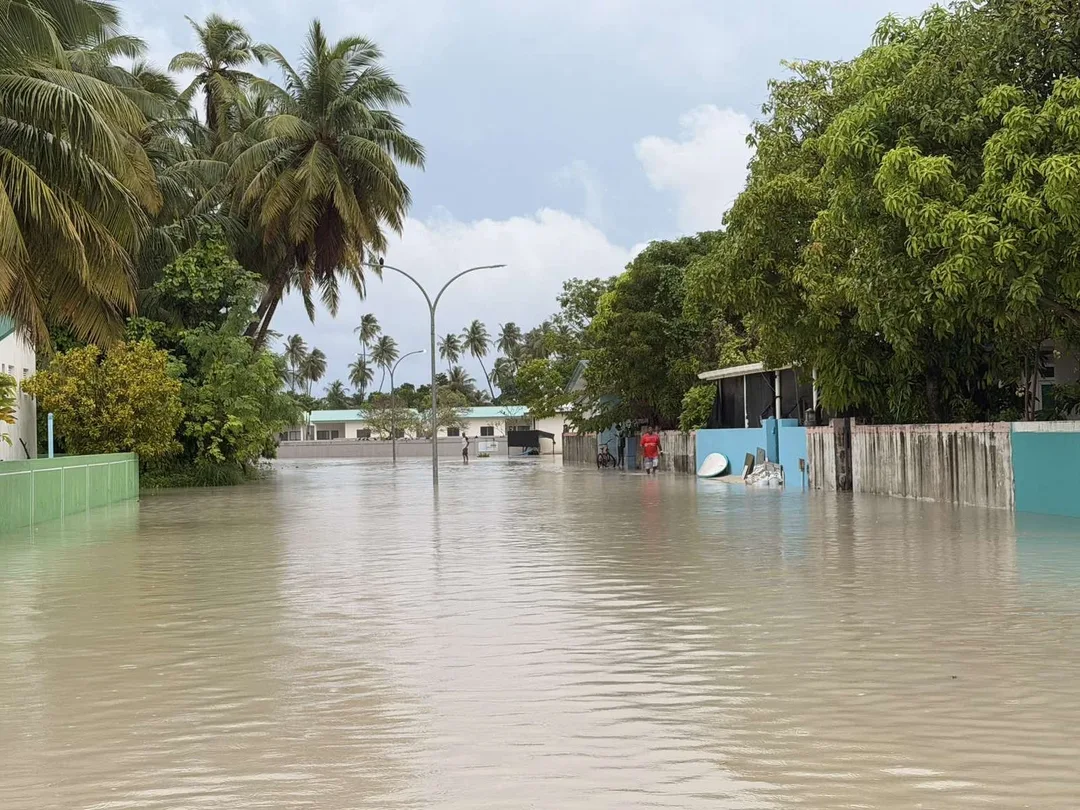
In its advisory for fisheries and the marine environment, the Meteorological Service says warmer-than-normal seas may increase stress on coral reefs and recommends regular monitoring. It also says warmer conditions may raise the risk of heat stress for vulnerable people, and that authorities should prepare for localised heavy rain and flooding while monitoring areas with rainfall deficits for dry conditions.
— Maldives Today news desk